
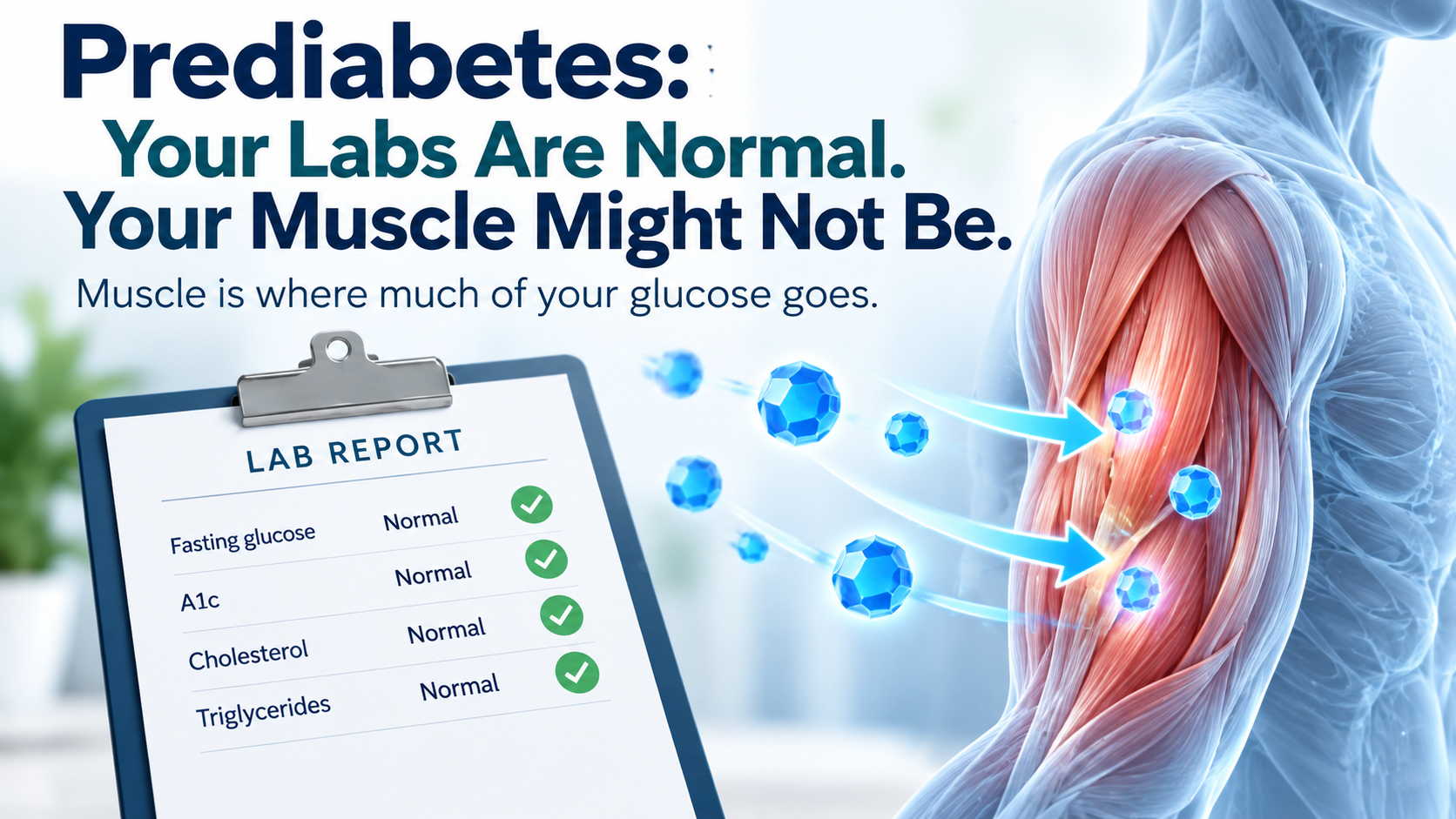
Every year, millions of people walk out of their annual physical with a green light. Fasting glucose: normal. A1C: normal. "See you next year."
And every year, a good number of those same people are already deep into a disease process that started years — sometimes decades — before either of those numbers ever moved.
Right now, roughly 96 million American adults have prediabetes. About 8 in 10 of them have no idea. Not because they're not paying attention, but because the two tests our entire screening system leans on — fasting glucose and A1C — are the wrong tests to catch this early. They're late indicators of a disease that starts somewhere else entirely.
I want to walk you through where it actually starts, because once you understand the mechanism, you'll understand why "your labs are normal" is often an incomplete sentence.
It doesn't start in your blood. It starts in your muscles.
The conventional story of type 2 diabetes goes: you eat too much sugar, your blood sugar rises, eventually your pancreas can't keep up, and you become diabetic. That's not wrong — it's just the last chapter of a book that started much earlier.
In a large analysis of more than 13,000 adults from NHANES III, Srikanthan et al1. found that the more skeletal muscle a person had relative to total body weight, the lower their degree of insulin resistance.
People with the highest relative muscle mass had lower HOMA-IR, lower A1C, and substantially lower rates of prediabetes and diabetes than those with the least muscle.
Importantly, this relationship remained even after accounting for age, sex, obesity, and central body fat.
Why does this matter?
Skeletal muscle is one of the body’s primary destinations for glucose after a meal. More healthy, active muscle gives the body a larger and more responsive place to put that glucose, meaning less insulin is required to control blood sugar. Over time, that can reduce the metabolic stress that drives insulin resistance, prediabetes, and eventually type 2 diabetes.
Why the cell door gets stuck
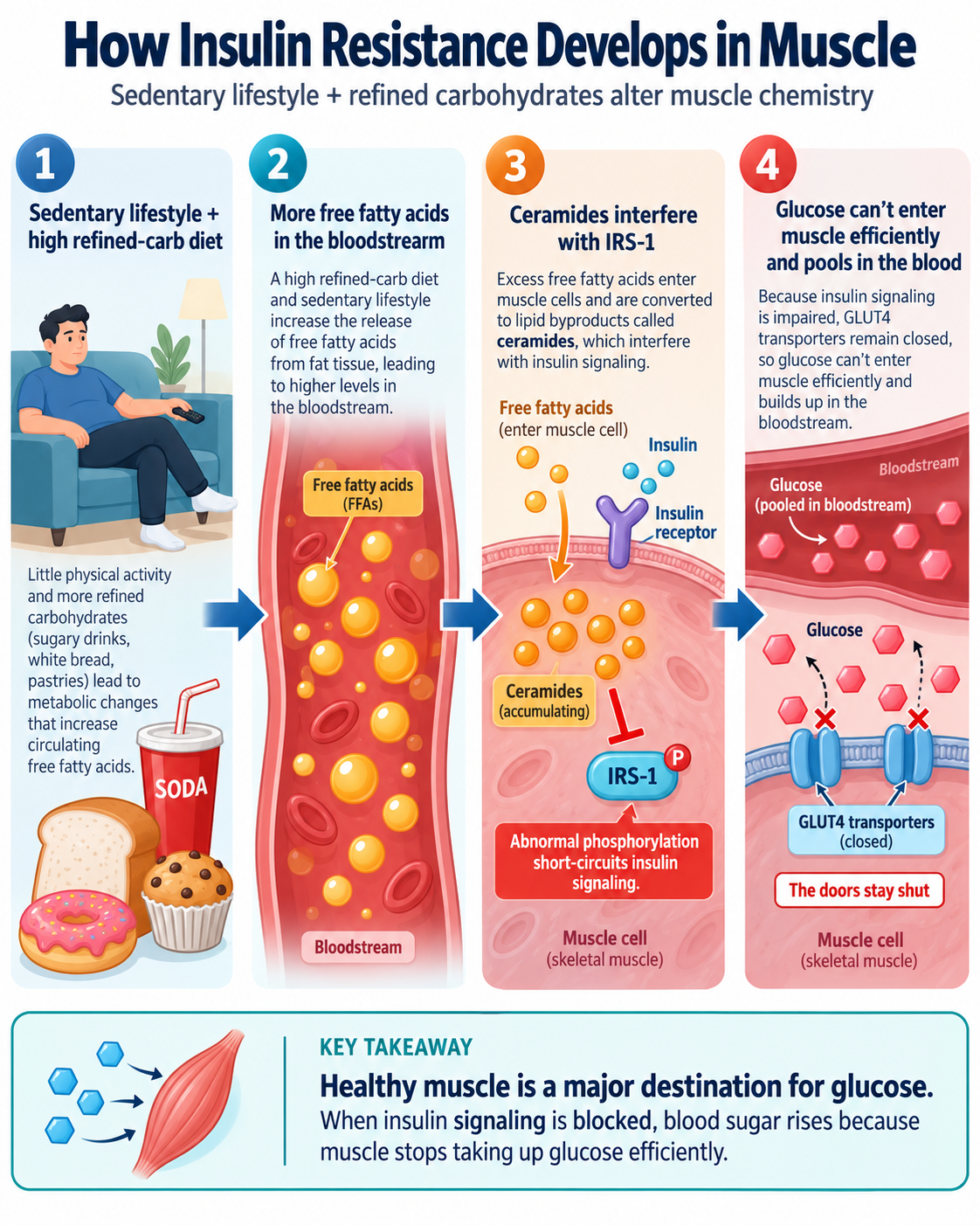
Here's the mechanism: don’t skip over it because it tells you exactly what to fix.
Glucose can't just wander into a muscle cell — it needs insulin to unlock the door.
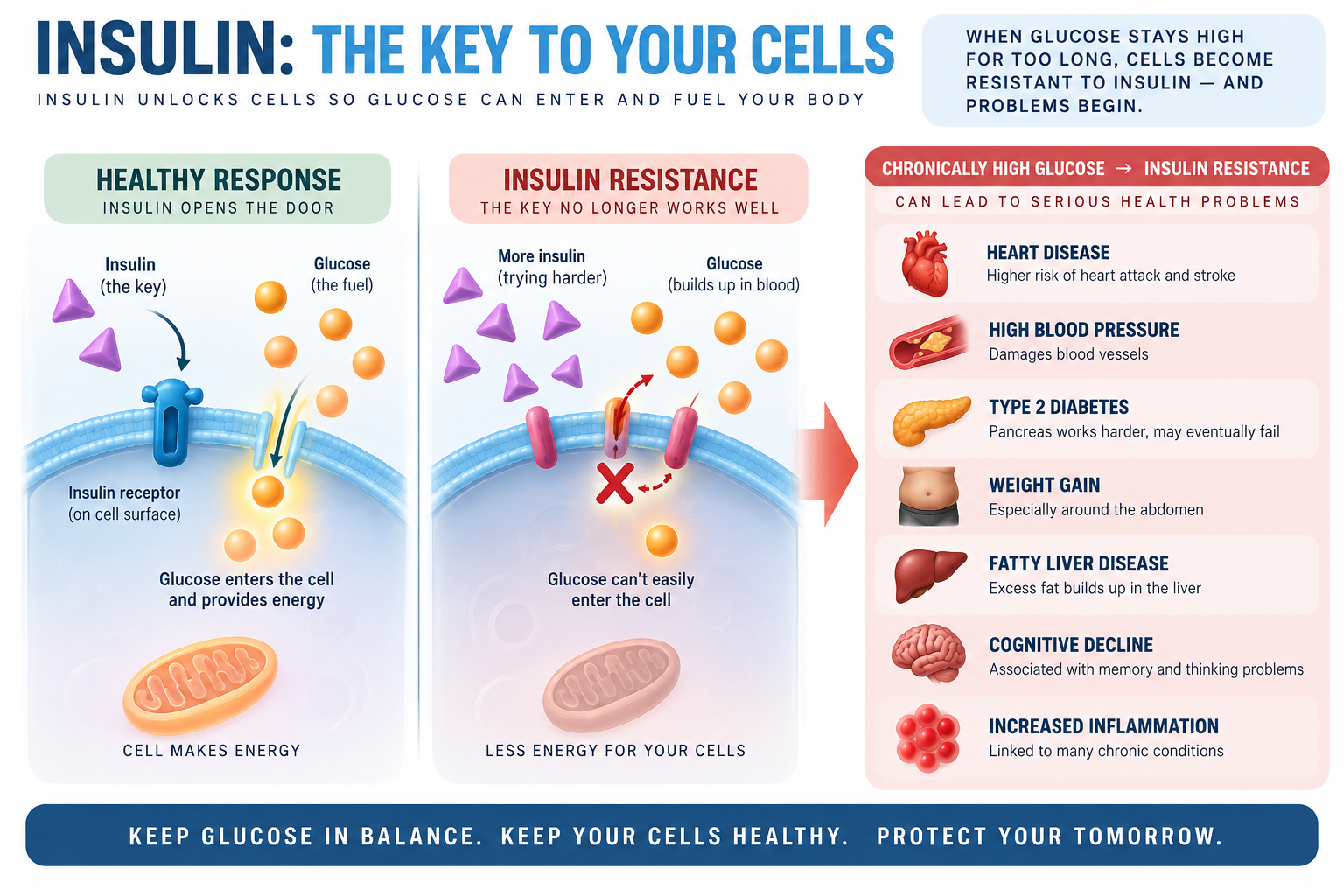
Insulin binds its receptor and triggers a signaling cascade (IRS-1 → PI3-kinase → Akt) that tells the glucose transporters to open. In a healthy, active muscle, that process works cleanly.
A sedentary lifestyle combined with a diet high in refined carbohydrates changes the chemistry. It floods the bloodstream with free fatty acids and drives fat byproducts called ceramides directly into muscle tissue. Those lipids physically interfere with IRS-1, forcing an abnormal phosphorylation that short-circuits the signal before it ever reaches the transport doors. The doors stay shut. Glucose bounces off the muscle and pools in the blood instead.
[Image - Ceramide blocks insulin uptake]
That's insulin resistance. Not a vague "your body doesn't process sugar well," but a specific, mechanical jam caused by toxic fat accumulation inside the muscle cell.
The silent decade (the pancreas abides)
If the muscle is locked and glucose is piling up, why does fasting blood sugar stay normal for years?
Because the pancreas compensates.
The locked muscle cells send a distress signal, and beta cells in the pancreas respond by pumping out more insulin to force the door open by sheer volume.
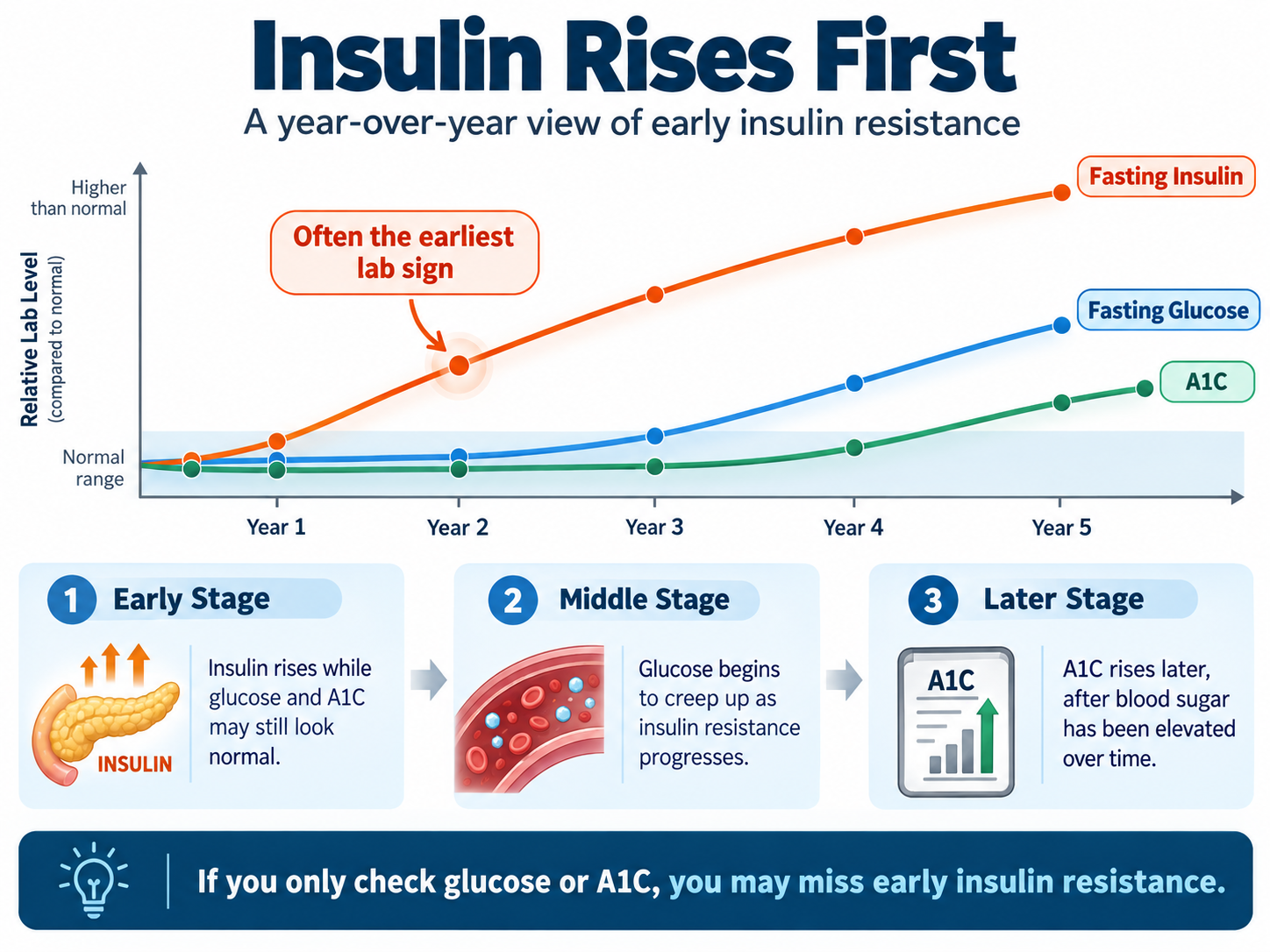
For up to a decade, this works. Fasting glucose stays flat. A1C stays flat. Insulin, meanwhile, climbs steadily in the background — and nobody's checking it, because it isn't on the standard panel.
I call this the silent decade – You look fine on paper while your insulin resistance quietly worsens and your receptors grow less sensitive with every cycle. By the time fasting glucose or A1C finally moves, you're not catching this disease early. You're 10 to 15 years behind it.
The number your doctor probably isn't running
This is exactly why I don't rely on fasting glucose and A1C alone in my own practice. The number that actually reveals what's happening inside your muscle is fasting insulin — and from it, a simple calculated insulin resistance score:
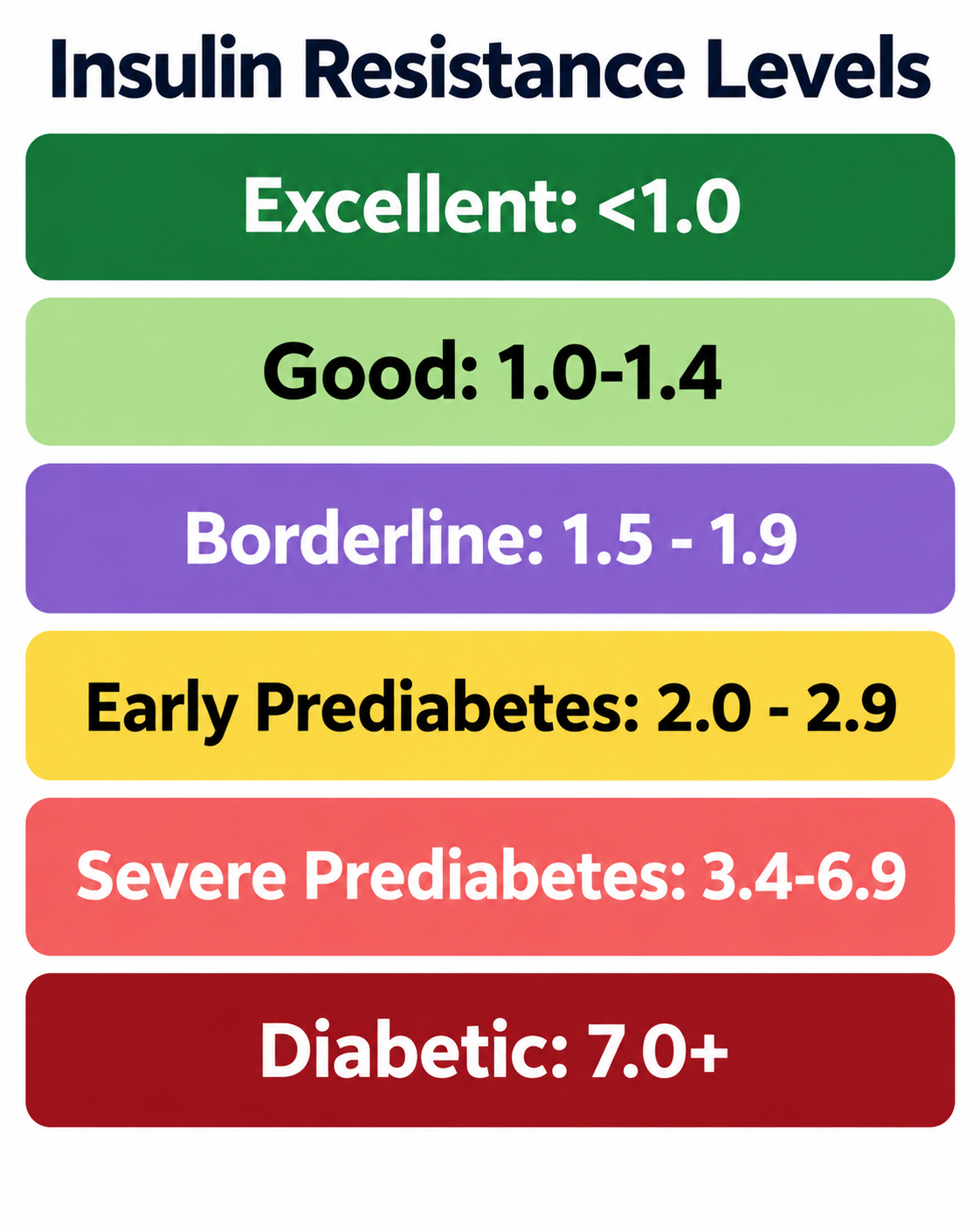
Notice how insulin elevation occurs much earlier than A1C or even fasting glucose.
If your A1C and glucose are "normal" but your fasting insulin is climbing, you are not in the clear — you're in the silent decade. And the damage from that decade isn't cosmetic. It's already reaching your blood vessels, kidneys, eyes, nerves, and sexual function, well before any diabetes diagnosis ever gets written down.
The part that should make you optimistic
Here's the half of this story that doesn't get told enough: this is reversible. Not "manageable" — reversible. Insulin sensitivity in skeletal muscle responds fast to the right inputs, because the mechanism is mechanical, not permanent.
Two things move the needle more than anything else.
Cut the carbohydrate load. Give your muscle a break from the refined carbs flooding your bloodstream with more glucose than it can currently clear — generally under 100g on non-training days, with more room on days you train hard. This isn't about eliminating carbs forever. It's about giving an overwhelmed system room to reset.
Use the muscle. Resistance training physically empties stored glycogen, and a depleted muscle needs dramatically less insulin to let glucose back in. This is the single fastest lever you have — mechanical, direct, no prescription required.
What other things can improve your metabolic health? Sleep and stress matter more than most people expect.
Poor sleep and chronic stress raise cortisol, and cortisol tells your liver to dump glucose into a bloodstream that's already struggling to clear it. Fix the sleep, and you take pressure off the whole system.
Medication has a role here — metformin, and for more severe resistance, GLP-1 medications — but I want to be precise about what that role is. Medication is a tool to get you to a place where lifestyle changes become achievable. It is not a substitute for doing the work.
What I'd actually do if I were you
Don't wait for your annual physical to tell you your fasting glucose is fine and call it a day. Ask for a fasting insulin level alongside your glucose and A1C, and calculate your own IR score. If it's climbing, you have a window most people never know they had. Take it.
Pre-diabetes isn't a life sentence. It's a highly responsive condition, and the earlier you catch it, the faster and more completely it reverses. The muscle got you into this. The muscle can get you out.
— Dr. Peter Cashio, MD Code 1 Concierge Care
References
Preethi Srikanthan and Arun S. Karlamangla, Relative Muscle Mass Is Inversely Associated with Insulin Resistance and Prediabetes. Findings from The Third National Health and Nutrition Examination Survey. J Clin Endocrinol Metab 2011 Sep;96(9):2898-903. Epub 2011 Jul 21. PMID: 21778224 DOI: 10.1210/jc.2011-0435